From Barcelona to the World Stage: How Spatial Intelligence Is Redefining the Luxury Buyer Journey
There is a moment, somewhere between seeing a space and feeling it, where a decision gets made. It happens in the silence — the pause before a buyer says, "I want to see this in person." That moment is invisible to most sellers. And in high-stakes luxury transactions, where the distance between interest and intent can stretch across continents, invisible moments cost real money.
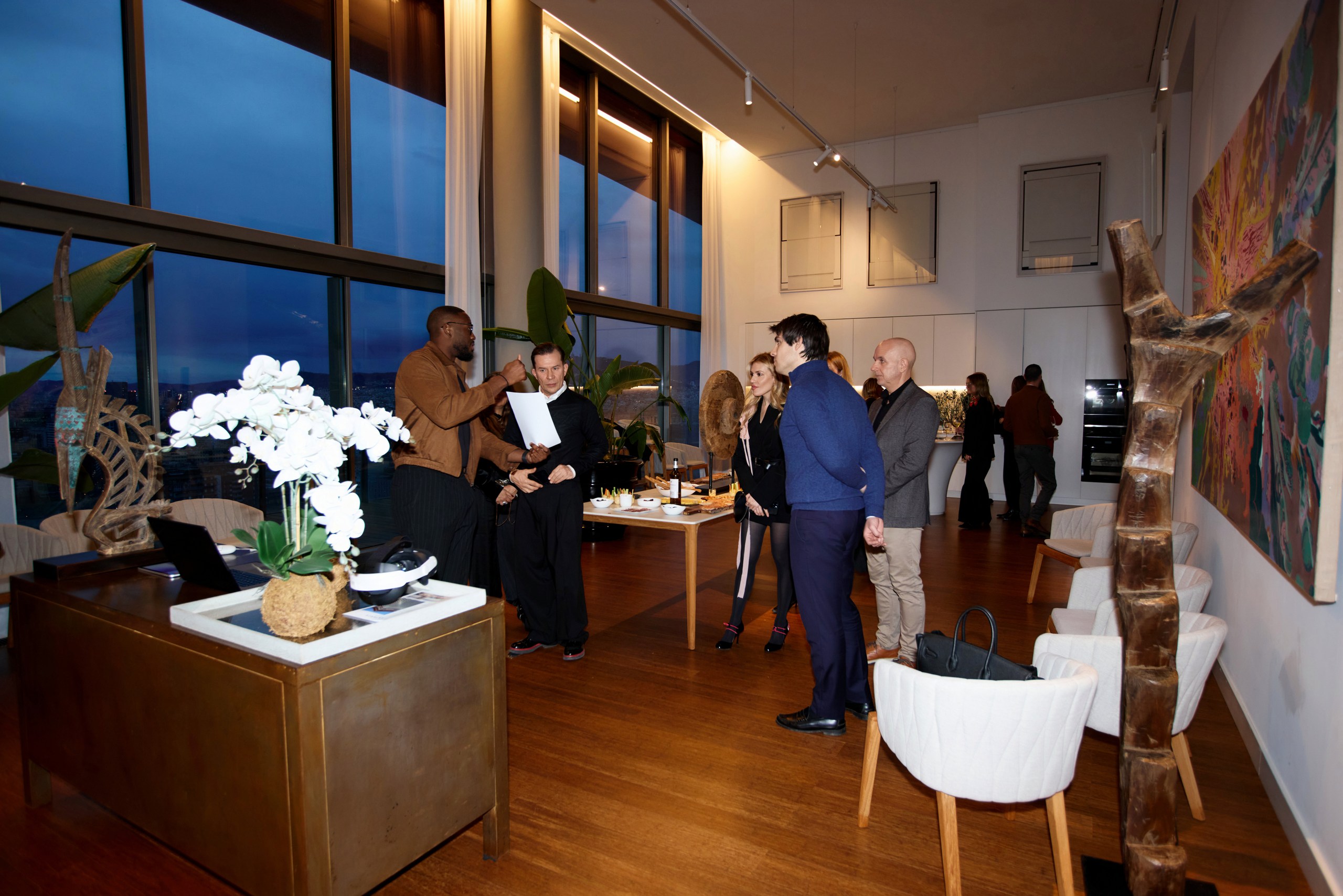
At Integrated Systems Europe (ISE) 2026 in Barcelona — the world's largest pro AV and integrated experience event — PATH Intelligence co-founder Nate Robert-Eze demonstrated what happens when that invisible moment becomes visible. In a featured AVIXA TV interview, Robert-Eze walked viewers through the creation of a digital twin of Antares Barcelona, the award-winning, 30-story luxury residential tower designed by architect Odile Decq. Using a combination of VR and AI, the project allows prospective buyers anywhere in the world to explore the property, interact with its spaces, and — critically — generate behavioral data about what they care about most.
Antares Barcelona is a fitting stage for this kind of demonstration. Developed by Shaftesbury Asset Management and designed by the celebrated French architect Odile Decq, the 30-story tower rises above Barcelona's coastal Diagonal Mar district as an architectural statement in its own right — an avant-garde silhouette of geometric ambition and signature deep-red accents that has already earned international design recognition. With residences starting from €1.15 million, and lifestyle amenities ranging from a rooftop sky terrace and infinity pool perched 100 meters above the Mediterranean to Le Grand Café Rouge by Michelin-starred chef Romain Fornell, Antares was built to attract a global buyer — the kind of prospect who might be browsing from Singapore, São Paulo, or the Gulf States and may never set foot in Spain before making a decision. That global reach is precisely what makes the silent buyer problem so acute, and precisely why Antares became a proving ground for spatial intelligence.
But the real story is not about one building. It is about what this technology unlocks for every industry that sells high-value experiences sight unseen.
What Is Spatial Intelligence — and Why Should Luxury Brands Pay Attention?
Spatial intelligence is an emerging discipline that treats physical and digital space as information rather than decoration. Instead of simply creating a beautiful virtual tour, spatial intelligence platforms like PATH capture and interpret what people do inside those environments: where they linger, what they revisit, which details they zoom in on, and what questions they ask.
This transforms a passive viewing experience into an active intelligence layer.
For luxury real estate, this is already proving valuable. Developers like the team behind Antares Barcelona face a particular challenge: their ideal buyer might be in Dubai, São Paulo, or Singapore. Virtual tours have long existed. What has not existed, until now, is the ability to understand which virtual visitors are seriously evaluating a purchase and which are simply admiring the views.
That distinction is the foundation of spatial intelligence.
Beyond the Penthouse: Where This Technology Transfers
The principles demonstrated at Antares Barcelona — AI-guided exploration, real-time behavioral analytics, multilingual engagement, and 24/7 availability — are not exclusive to residential towers. They apply wherever three conditions intersect: the product is experiential, the price point demands confidence, and the buyer may be geographically remote.
Here is where spatial intelligence is positioned to create the most impact beyond commercial real estate.
Luxury Hospitality and Travel
The luxury travel market operates on a paradox: guests expect deeply personal, one-of-a-kind experiences, yet most booking decisions happen through flat photography and text descriptions. A spatial intelligence layer applied to resort and hotel tours could reveal which suite configurations resonate with which guest profiles, which amenities drive the final booking decision, and how to tailor pre-arrival communications based on what a guest explored most intensely. Luxury hospitality brands are already experimenting with VR tours — the missing piece has been the intelligence behind them.
Superyachts and Private Aviation
Yacht brokers and private jet sales teams face one of the most exaggerated versions of the silent buyer problem. A prospective owner might spend weeks reviewing digital renderings of a custom build, but the broker has almost no insight into which layout features matter most, which competing configurations were studied, or when interest transitions from aspirational browsing to active intent. Digital twin environments enhanced with spatial intelligence could surface these behavioral signals, helping sales teams engage at exactly the right moment with exactly the right information.
Branded Residences and Mixed-Use Developments
The branded residence sector — properties tied to hospitality names like Ritz-Carlton, Four Seasons, and Aman — is growing rapidly in global gateway cities. These developments sell a lifestyle, not just a floor plan. Spatial intelligence allows developers to understand how prospective buyers interact with branded lifestyle elements: Do they spend time exploring the spa concept? The members-only dining experience? The curated art collection? These behavioral patterns can inform everything from pricing strategy to marketing creative.
Destination Retail and Experiential Showrooms
Luxury automotive brands, couture houses, and high-end consumer electronics companies increasingly invest in experiential showrooms and digital configurators. Spatial intelligence adds a dimension these tools currently lack — the ability to read buyer behavior within the experience itself and route that data to sales teams in real time.
The ISE Moment: Why This Matters Now
ISE 2026 reached a new scale, occupying over 100,000 square meters of exhibition space with more than 1,700 exhibitors and attendance expected to exceed 85,000 professionals. AI Barcelona The central theme was unmistakable: integrated systems are no longer just about connecting hardware. They are about environments that sense, interpret, and respond.
Robert-Eze's demonstration of the Antares Barcelona digital twin landed at the intersection of this industry shift. The project was featured as part of ISE's Tech Tours, placing spatial intelligence alongside the broader conversation about AI-driven environments that serve commercial, hospitality, and experiential applications.
For PATH Intelligence, the ISE platform represents an expansion beyond the company's foundation in residential real estate — where it already serves luxury developers and top-producing agents — into the broader commercial market. The core technology remains the same: an AI agent (PATH calls theirs "Bella") that operates around the clock, in multiple languages, engaging prospects within immersive virtual environments and translating their behavior into actionable intelligence for sales teams.
What changes across verticals is the context, not the capability.
What This Means for Sales Teams in Every Luxury Vertical
Spatial intelligence does not replace human relationships. It strengthens them by solving the information asymmetry that plagues high-value, long-cycle sales.
Today, a luxury yacht broker, a resort sales director, or a branded residence advisor faces the same fundamental challenge: they invest heavily in creating beautiful digital presentations, but they have limited insight into which prospects are genuinely evaluating a purchase. They follow up based on intuition, timing, or the simple fact that someone filled out a contact form.
Spatial intelligence introduces a more informed model. When a prospect spends significant time examining the helm layout of a 40-meter yacht, that is a signal. When they return three times to the owner's suite of a specific jet configuration, that is a pattern. When they ask an AI guide detailed questions about mooring fees or hangar logistics, that is intent.
The technology does not make the sale. It tells the salesperson where the conversation should begin.
Watch the Full Interview
To see the Antares Barcelona project in action and hear Nate Robert-Eze explain how VR and AI are converging to reshape how luxury buyers explore and engage with spaces, watch the full AVIXA TV interview from ISE 2026 here.